 FitzRalph, Summa
The edition
The book
Richard FitzRalph (c. 1300–1360), archbishop of Armagh, wrote the Summa in quaestionibus Armenorum at the papal court in Avignon in the 1340s, for Armenian prelates who had come there and put their questions to him. He cast it as a dialogue: John asks and objects, Richard answers. The work was printed once, at Paris in 1512, corrected by John Sudoris, a doctor of theology of the college of Navarre. This site reads that print, from the copy in the Bayerische Staatsbibliothek in Munich.
The Latin
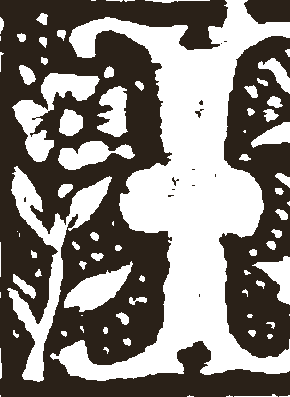
The Latin on these pages is a machine reading of the 1512 print. A handwriting-recognition model was trained on this book's own Gothic type and read every line of it; the abbreviations were then expanded by rule. Measured against careful human reading, about one letter in a hundred is wrong. The machine cannot see the woodcut initials that open each speech, so a speech may begin Obannes for Iohannes. The Latin is shown as the machine read it: where the translator read the print differently, the English follows the print, and a note says so. Every passage the translator doubted was checked against the page image. Each red folio mark opens the page in the Munich viewer.
The English
The translation is new and is being made book by book, in order. Scripture is given in the words of the Douay–Rheims version where FitzRalph quotes the Vulgate. Notes give the sources FitzRalph cites, explain hard places, and say where the print itself is in error; those printer's errors are gathered at the end of each book.
Citing
Cite by folio, column and line of the 1512 print: fol. 22ra.14 is folio 22 recto, column a, line 14. The prelims are cited by signature.
The image
The portrait on the front page is the historiated initial of Cambridge, Corpus Christi College, MS 180, fol. 1r, a fourteenth-century manuscript of FitzRalph's works; the scroll reads Armachanus, "the man of Armagh". Reproduced from the Parker Library on the Web. The colours of this site are taken from it; its shapes are taken from the 1512 print.
Licence
The English translation and notes are © Wroot Press and licensed under CC BY-NC 4.0. The Latin text of the 1512 print is in the public domain.